Tuesday, April 30, 2024

Ed and Lorraine Warren Go Inside the Amityville Horror House in 'Shock Doc' Preview

ed and lorraine warren house

Admission is $10 and reservations are required to visit the grounds. Groups with 10 or more visitors must make an appointment and sign a group release form prior to visiting. Guided, one-hour personal tours of the interior are available for $275 (1-2 adults) and $450 (3-4 adults). Diehard fans can indulge in an Eames tradition, a picnic in the house meadow, for $750 (1-4 adults). In the five years leading up to his death, his health had deteriorated. This was after he allegedly collapsed in 2001 when he was opening the door to let his cat in.

Where is Ed and Lorraine Warren’s House Located?

Even though the paramedics were able to restart his heart, he continued to be in a coma for 11 weeks. Spera had a number of Facebook requests for tours on Oct. 22, 2016, but he posted a message that the town shut the museum down and he ceased tours, but was appealing it, while looking to relocate, according to Chapman. Neighbors have complained over the years about strangers knocking on their doors and tapping on their windows at all hours to ask where the museum is.

The "shadow" doll

Tours of the property, given by Cal Poly Pomona architecture students, are offered on Saturdays from 11 a.m. Edward Warren Miney and Lorraine Rita Warren were both paranormal investigators and authors. While Edward (Ed) was a renowned demonologist, Lorraine was known to be clairvoyant, and often served as a medium in many of the cases that the couple undertook. The two even founded the New England Society for Psychic Research in 1952.

Will Rogers' Home in Will Rogers State Historic Park

… She says she has documentation, but she has nothing,” Carl Glatzel told The Courant at the time of the suit. Reed and Zaffis told The Courant that a priest exorcised the spirits from the house, but the Hartford Archdiocese would not confirm that. They founded the New England Society for Psychic Research, which Spera now runs. Then people started calling them to talk about odd occurrences in their homes. Ed was working as an usher at the Colonial Theater in Bridgeport, Connecticut, where Lorraine was a regular attendee.

Guided tours of the museum are supplemented by living history performances, educational programs, hands-on training, exhibitions and special events. A beige colonial house set back on a wooded property on Knollwood Street has notoriety as the former home of late ghost hunters Ed and Lorraine Warren. It is also the site of the Warren’s Occult Museum, with haunting exhibits like the infamous Annabelle doll. The museum was closed for a zoning violation, because the use is not allowed in residential neighborhoods, but that has not stopped occultists and tourists from descending upon the small dead end street. The Conjuring is a movie that’s helped launch the history of paranormal investigators Ed and Lorraine Warren into pop culture stardom. Interestingly, however, there is a case of theirs that rarely gets the publicity of those featured in the Conjuring movies.

The most famous cases investigated by paranormal researchers Ed and Lorraine Warren, including the Devil Made - Daily Mail

The most famous cases investigated by paranormal researchers Ed and Lorraine Warren, including the Devil Made.

Posted: Tue, 17 Oct 2023 07:00:00 GMT [source]

Meanwhile, his older brother, Carl Glatzel, has consistently claimed over the years that the family faked and exaggerated incidents while the Warrens incited and encouraged them in pursuit of fame and wealth. In the new Netflix documentary, he blames them for tearing his family apart. Ed and Lorraine Warren were both raised in the Catholic church in Bridgeport, Connecticut. By the time they met as teenagers in 1944, she had already fully embraced her identity as a purported psychic medium, and he had gained a deep interest in the paranormal after having grown up in a house he reportedly believed was haunted. After fighting in World War II, Ed studied art in college, but wound up using his talent to fuel his rapidly deepening paranormal interests instead. Together with Lorraine, he would show up at an allegedly haunted house, paint a picture of the house, and then gift the artwork to the homeowners as a pretext to negotiate his way inside.

ed and lorraine warren house

Known as the "Father of the Port of Los Angeles," Phineas Banning built this historic residence in 1864, several years after he founded the town of Wilmington. The 23-room Banning House is widely regarded as the finest example of domestic Greek Revival architecture in Southern California. The house interiors have been carefully restored to their original Victorian beauty - 18 rooms are open to the public.

The walls of the Avila house are made of adobe brick, a material consisting of clay, water and other organic materials like straw. Formally known as Case Study House No. 8, the Eames House is a Mid-Century Modern architectural landmark located in Pacific Palisades. It was built in 1949 by renowned husband-and-wife designers Charles and Ray Eames, to serve as their home and studio. The couple moved into the house on Christmas Eve, 1949 and lived there the rest of their lives. In September 2006, the Eames House was added to the National Register of Historic Places and designated a National Historic Landmark.

Two fifth-year USC architecture students live in the house full-time; the resident students change every year. Movie fans will recognize the house as Doc Brown’s mansion from the Back to the Future movie trilogy. The Gamble House is designated as California Historical Landmark #871 and is listed in the National Register of Historic Places.

During the renovation, all of the remaining original structures from the Hearst days were demolished, except for a 110-foot Italian marble swimming pool and one of the guest homes, now known as the Marion Davies Guest House. The Annenberg Community Beach House opened to the public in April 2009. The site is open daily and is also used as a special events/wedding venue and filming location. The site that is currently known as the Annenberg Community Beach House was originally a five-acre oceanfront property belonging to William Randolph Hearst and his mistress, Marion Davies. The lavish compound was designed in the Georgian Colonial-style by architects Julia Morgan and William Flannery and featured a three-story main house, three detached guest houses, servants' quarters, dog kennels, tennis courts and two swimming pools.

The film was never made public, and the spirit allegedly turned out to be the work of a woman named Judith Penney, who was reportedly wearing a white bedsheet over her head. Akin to the room full of cursed objects shown in the Conjuring movies, the Occult Museum was made up of a variety of artifacts purportedly taken from Ed and Lorraine’s various investigations. Despite her early experiences with clairvoyance, Lorraine didn’t believe in ghosts until later in life, after she and Ed began visiting and painting haunted houses. "In the beginning, I was more than a bit wary of the people with whom we spoke," she said in The Demonologist. Another of their investigations is the 1975 Amityville Horror, in which a New York couple George and Kathy Lutz claimed that their house was haunted by a violent, demonic presence.

Their son-in-law Tony Spera, in a phone interview from his home in New Milford, said Ed grew up in a house he believed was haunted. From age 5 to 12, Ed heard knocking, sounds, footsteps, shadows, names called out. Instead, they made a living from giving lectures at colleges, and by licensing the rights to their stories for film, TV, and book projects.

There are a few familiar items you will have spotted inside the room, like the Perron music box that appeared in The Conjuring films, the armour and the monkey playing the accordion. Warner Bros. released a 360 tour of the room that you can explore below. The key phrase here isn’t about the devil or God, but rather the fairy tale. Even as Spera purports to usher fans into a world of supernatural terror, he knows that all of this is heightened, romanticized lore — not just folklore, but the story of the Warrens themselves as a couple of truth-seeking soulmates. Not only that, but even after his death in 2006, Ed Warren stands accused of grooming and entering into a sexual relationship with an underaged girl, allegedly with his wife’s full awareness and complicity. That leaves us with two very different portraits of the Warrens today.

The two have documented much of their cases in the many books they have penned. One of their most famous investigations is that of a Raggedy Ann doll, popularly known as Annabelle. The couple received the doll from a nurse in the 1970s, after the doll supposedly began to change its position, and allegedly once even attacked a male friend.

Until the various Conjuring films, however, by far the most notorious case the Warrens ever consulted on was that of the Lutz family, in Amityville. Ed and Lorraine Warren were paranormal investigators, who worked in varied capacities to observe and study paranormal activities. In addition to this, they also helped with several cases of alleged hauntings. While Ed was a religious demonologist, Lorraine worked as a medium. Thus, the two often traveled to various places, offering their services, and even share their experiences with anyone interested in knowing.

Understanding by Design Grant Wiggins, Jay McTighe

understanding by design wiggins and mctighe

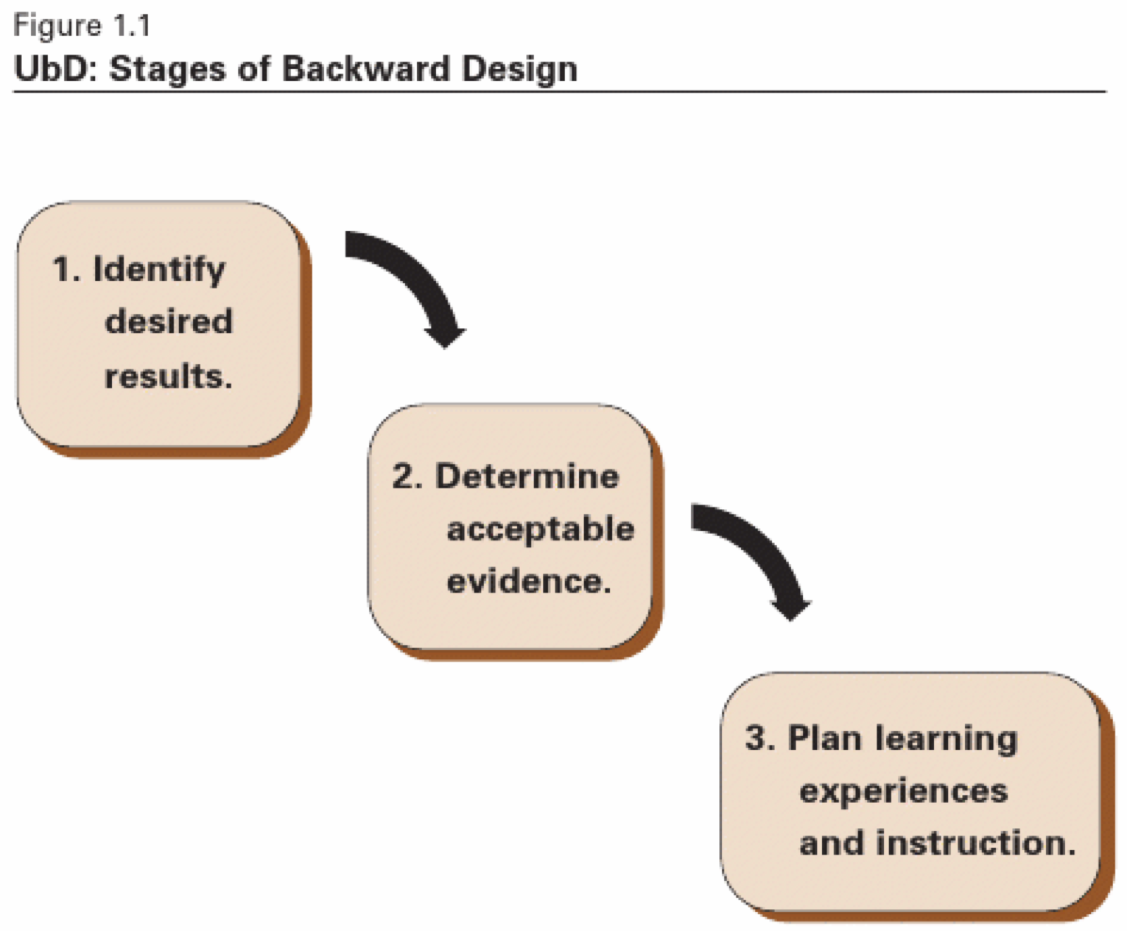
Once the learning goals have been established, the second stage involves consideration of assessment. The backward design framework suggests that instructors should consider these overarching learning goals and how students will be assessed prior to consideration of how to teach the content. For this reason, backward design is considered a much more intentional approach to course design than traditional methods of design. The first question listed above has instructors consider the knowledge that is worth being familiar with which is the largest circle, meaning it entails the most information.

The Three Stages of Backward Design

Prior to that, he helped lead Maryland’s standards-based reforms, including the development of performance-based statewide assessments. As the quote below highlights, teaching is not just about engaging students in content. Student learning and understanding can be gauged more accurately through a backward design approach since it leverages what students will need to know and understand during the design process in order to progress. The knowledge and skills at this substage are considered important to know and do. The information that fits within this question could be the facts, concepts, principles, processes, strategies, and methods students should know when they leave the course. The big ideas and important understandings are referred to as enduring understandings because these are the ideas that instructors want students to remember sometime after they’ve completed the course.

More to Read

Information that fits within this question is the lowest priority content information that will be mentioned in the lesson, unit, or course. “Last year, I was starved for bass players,” says Bill Yeager, director of jazz studies at San Diego State University. Hofmann wittily turns the tables on usual roles with her version of the Gershwins’ “Embraceable You,” giving Magnusson’s bass the lead melodic role at first while she plays backup counterpoint, then switching into an improv mode while Magnusson thrums along underneath her flute. “It’s some great playing, she’s a wonderful player, just some good jazz,” said Phil Sheridan, vice president of Jazz Alliance, explaining why his company selected Hofmann’s project as one of its 20 releases for 1992. MyLife aggregates publicly available information from government, social, and other sources, plus personal reviews written by others.

Understanding by Design, Expanded 2nd Edition

He has extensive experience as a classroom teacher, resource specialist, program coordinator, and in professional development, as a regular speaker at national, state, and district conferences and workshops. Combining provocative ideas, thoughtful analysis, and tested approaches, this new edition of Understanding by Design offers teacher-designers a clear path to the creation of curriculum that ensures better learning and a more stimulating experience for students and teachers alike. He served as director of the Maryland Assessment Consortium, a collaboration of school districts working to develop and share formative performance assessments and helped lead standards-based reforms at the Maryland State Department of Education.

Articles

understanding by design wiggins and mctighe

Furthermore, the answers to question #3 regarding enduring understandings can be adapted to form concrete, specific learning goals for the students; thus, identifying the desired results that instructors want their students to achieve. In Understanding by Design, Wiggins and McTighe argue that backward design is focused primarily on student learning and understanding. When teachers are designing lessons, units, or courses, they often focus on the activities and instruction rather than the outputs of the instruction. Therefore, it can be stated that teachers often focus more on teaching rather than learning. This perspective can lead to the misconception that learning is the activity when, in fact, learning is derived from a careful consideration of the meaning of the activity. Educators from kindergarten through college can get everything they need—guidelines, stages, templates, and tips—to start designing lessons, units, and courses that lead to improved student performance and a more stimulating experience for students and teachers alike.

The second question above allows the instructor to focus on more important knowledge, the knowledge and skills that are important to know and do. Finally, with the third question, instructors begin to detail the enduring understandings, overarching learning goals, and big ideas that students should retain. By answering the three questions presented at this stage, instructors will be able to determine the best content for the course.

Authors Grant Wiggins and Jay McTighe answer these and many other questions in this second edition of Understanding by Design. With an improved UbD Template at its core, the book explains the rationale of backward design and explores in greater depth the meaning of such key ideas as essential questions and transfer tasks. Readers will learn why the familiar coverage- and activity-based approaches to curriculum design fall short, and how a focus on the six facets of understanding can enrich student learning. With an expanded array of practical strategies, tools, and examples from all subject areas, the book demonstrates how the research-based principles of Understanding by Design apply to district frameworks as well as to individual units of curriculum. In contrast, the backward design approach has instructors consider the learning goals of the course first. These learning goals embody the knowledge and skills instructors want their students to have learned when they leave the course.

Subject Area Resources

We empower educators to reimagine and redesign learning through impactful pedagogy and meaningful technology use. We achieve this by offering transformative professional learning, fostering vibrant communities, and ensuring that digital tools and experiences are accessible and effective. Wiggins, a nationally recognized assessment expert, worked on some of the most influential reform initiatives in the country, including Vermont's portfolio system and Ted Sizer's Coalition of Essential Schools. He consulted with schools, districts, and state education departments on a variety of reform matters, organized conferences and workshops, standards clarification, and developed print materials and web resources on curricular change. This teaching guide will explain the benefits of incorporating backward design. Finally, an overview of a backward design template is provided with links to blank template pages for convenience.

UBD in public school math - Inquirer.net

UBD in public school math.

Posted: Sun, 23 Oct 2011 07:00:00 GMT [source]

Every task and piece of instruction has a purpose that fits in with the overarching goals and goals of the course. As previously stated, backward design is beneficial to instructors because it innately encourages intentionality during the design process. It continually encourages the instructor to establish the purpose of doing something before implementing it into the curriculum. Therefore, backward design is an effective way of providing guidance for instruction and designing lessons, units, and courses. Once the learning goals, or desired results, have been identified, instructors will have an easier time developing assessments and instruction around grounded learning outcomes. Well known for his work with thinking skills, McTighe has coordinated statewide efforts to develop instructional strategies, curriculum models, and assessment procedures for improving the quality of student thinking.

Linda Darling-Hammond makes the case for expanded use of performance assessments. Yeager has nine bassists, which amounts to about one-fourth of all jazz majors. In any other year, according to Yeager, bassist Royce Ferguson, a junior, would have been at the top of the heap, but this year he’s running neck-in-neck with fellow SDSU student Kevin Delgado, the bassist for San Diego Latin jazz groups Sol E Mar and Afro Rumba. Which means Ferguson is good, and Wednesday night’s junior recital featuring Ferguson should produce some first-rate music. In fact, the modest Wiggins has recorded a library of music that spans some 50 years, including dozens of original songs, making him a living encyclopedia of jazz.

Wiggins and McTighe provide an expanded array of practical tools and strategies for designing curriculum, instruction, and assessments that lead students at all grade levels to genuine understanding. The incorporation of backward design also lends itself to transparent and explicit instruction. If the teacher has explicitly defined the learning goals of the course, then they have a better idea of what they want the students to get out of learning activities. Furthermore, if done thoroughly, it eliminates the possibility of doing certain activities and tasks for the sake of doing them.

A description of an action research study of classroom assessment practices in Donegal (PA) school district. Neurologist Judy Willis explains how video games provide insights into teaching. McTighe is an accomplished author, having coauthored more than a dozen books, including the award-winning and best-selling Understanding by Design® series with Grant Wiggins. He has written more than 50 articles and book chapters and has been published in leading journals, including Educational Leadership (ASCD) and Education Week. Backward Design Template with Descriptions (click link for template with descriptions).

Teacher Ron Berger discusses how to discusses a culture of excellence through authentic, project-based learning. Marc Chun described the qualities of authentic performance tasks and how to teach toward them. Neurologist and teacher, Dr. Judy Wills, discusses how UbD reflects insights about learning from neuroscience. Though he always kept his own recording career going, there were periods, sometimes lasting several years, when he was drawn away from solo projects--including about a dozen albums--by his much-in-demand role accompanying singers (including Lena Horne, Helen Humes and Kay Starr). The New York City BOE offers an informative video that describes the use of Norman Webb’s Depth of Knowledge (DOK) framework for teaching and assessing the Common Core Standards.

At this stage it is important to consider a wide range of assessment methods in order to ensure that students are being assess over the goals the instructor wants students to attain. Sometimes, the assessments do not match the learning goals, and it becomes a frustrating experience for students and instructors. Use the list below to help brainstorm assessment methods for the learning goals of the course.

The Warrens Occult Museum

ed and lorraine warren house

The legendary parties held at the compound during Hearst and Davies’ tenure had guest lists that often numbered in the thousands. Luminaries such as Howard Hughes, Clark Gable, Charlie Chaplin, Bette Davis, Carole Lombard, Cary Grant, Winston Churchill, and Gloria Swanson all spent time at the massive estate at one time or another. The Warrens locked it away after working on a case where a student in the 70s experienced some weird occurrences when she was given the doll. She took it to a medium who told her it was possessed and eventually the Warrens were called in. They claim Annabelle is responsible for at least one death, a young man who challenged the doll.

Ed and Lorraine Warren never charged money for their investigations.

Judith Penney, who is sometimes described as Ed’s “assistant” or his “liaison,” has alleged that beginning in the early ’60s, Ed Warren, then in his 30s, began grooming her. In 1963, when she was 15, Penney claimed Warren moved her into the Warrens’ house in Bridgeport and commenced a full-blown sexual affair, with Lorraine’s full consent, that lasted until just a few years before Ed’s death in 2006. It must be said, however, that most of these events seem to be the result of a clever hoax. Apparently one of the patrolling police officers at one point noticed the Goodins’ adopted daughter, Marcia, attempting to tip over a television set with her foot.

Facts About Famed Paranormal Investigators Ed and Lorraine Warren

There are special events and you can purchase or rent a video tour of the collection. Paranormal investigators Ed and Lorraine Warren operated for decades as the preeminent voices in the believer community, and their strange career of ghost-hunting and demon-busting is on display in their very own Occult Museum. She felt a connection she had never quite felt with anyone else before and decided to completely open up about her family to him — something she had never done with anyone else. Being such icons in the paranormal field both on-screen and otherwise, the Warrens built a legacy for themselves. Horror movie enthusiasts would undoubtedly be well acquainted with "The Conjuring" movie universe and one particularly terrifying doll, Annabelle. Lorraine often stated that ouija boards, tarot cards, and psychics are often the entry point for many of these beings.

Boothe Memorial Park

ed and lorraine warren house

There is a piano, which apparently plays on its own during witching hours. Another one is a toy monkey that is allegedly possessed by a demon, which attempts to kill someone after stalking them. The mirror from, ‘The Conjuring’ is also very much present in the museum. Borley Rectory is considered to be the most haunted house in England. There is also a shadow doll, which allegedly visits its victims in their dreams and stops their heart.

Will Rogers' Home in Will Rogers State Historic Park

Tours of the VDL House are conducted on Saturdays by architecture students from Cal Poly Pomona. The only Richard Neutra-designed house that is now open regularly to the public, the Neutra VDL Studio and Residences is a Silver Lake hidden gem that was built by the famed architect in 1932. He ran his practice out of a studio here, and along with his wife Dione, raised three sons in this house, which he designed to demonstrate that Modernist principles could be enjoyed by less affluent clients, while maintaining privacy. Natural light, glass walls, patios and mirrors are hallmarks of the Neutra VDL House.

Clowning for Novices: History and Practice With Rose Carver

ed and lorraine warren house

By 1974 the events had transpired enough that the media started to get involved. The house was drawing in attention not only from the aforementioned Ed and Lorraine Warren, but also the American Society for Psychical Research and the Psychical Research Foundation. The Goodin family were interviewed by police who were patrolling the area 24 hours a day. It was enough that public civilians began crowding the house and one person even attempted burning it down to the ground. Ed went to Paier College of Art in Hamden, but couldn’t let go of his ghost fascination.

The Doctors House Museum in Glendale

It has been for decades without ever acting up, trying to escape, or anything of the sort — much to the chagrin of horror movie enthusiasts who would enjoy a little more mystery. In 1979, the ghost hunters' daughter met a police officer, Tony Spera. Paranormal investigators Ed and Lorraine Warren first publicized their research into the supernatural in the 50s and went on to author many books and inspire many movies on the chilling subject, including "Anabelle" and the entire "The Conjuring" universe. When this residential house was built by Vienna-born Rudolf Schindler back in inspired by a recent trip to Yosemite with his wife - it was extremely unconventional at the time for a place to live. In reality, it was meant to be a cooperative live-work space between two families, much like a camp site.

How Accurate Are 'The Conjuring' Movies to The Real-Life Cases? - Collider

How Accurate Are 'The Conjuring' Movies to The Real-Life Cases?.

Posted: Fri, 29 Mar 2024 07:00:00 GMT [source]

The Haunted House Diaries

In 2013, the James Wan-directed horror movie, "The Conjuring," was released. It chronicles the lives of a family that moved into a farmhouse where they experience paranormal phenomena. If you enjoy exploring the historic homes of famous, and not-so-famous people, there are a number of historic residences in Southern California that are open to the public as museums.

Inside the Warrens' artefact room - the occult museum where real-life Annabelle is locked up

In fact, claims continued to be made even after Marcia admitted to pulling the supposed hoax. The stories of chairs and furniture moving, crucifixes flying off walls, and knives being thrown about were all reported by the likes of firefighters and law enforcement. As such, it seems that the house in Bridgeport, Connecticut is a little more intricate of a story than just some average kook telling tall tales. Spera said the Warrens, helped by their nephew John Zaffis, examined the house and decided it was haunted. Ed and Lorraine were called in to visit the house and decided that it was haunted. Ed and Lorraine were born in Bridgeport, he in 1926 and she in 1927.

When the museum was open for visits, there was a strict policy on not touching any of the items. However, there is a case of a visitor who allegedly tried to bang on the glass case in some way and got killed in an accident, just hours later. Neutra ran his architectural from the original house from 1932 until a fire destroyed most of the main building in 1963. The Research House was rebuilt with the most modern materials and design adaptations by Neutra and his son Dion in 1966. There is also a Garden House on the property that was occupied by Dion Neutra and his family.

In addition to the noise and loitering, she said some drivers would knock over sections of her rock wall, while turning around. If Spera decides to start a permitted museum business, he can now do so in Monroe. After 2016, the Planning & Zoning Commission decided to allow museums in some commercial areas, including Business 1, Business 2 and Limited Office Retail zones. On Sunday, April 8, 2018, Spera emailed Chapman to preempt neighborhood complaints when he invited a television crew to Lorraine Warren’s house for an episode of a TV program on the Travel Channel. Chapman said he submitted a letter with signatures from eight Knollwood Street residents (some were couples) as evidence during the hearing at Town Hall.

They first encountered it in 1968, when two roommates claimed their Raggedy Ann doll was possessed. Having authored many books about the paranormal and about their private investigations into various reports of paranormal activity, the couple soon became renowned for their craft. They mostly kept their only child, Judy, out of their crazy professional life. While that would make for an incredibly cool story among children —or not, Judy never told anyone what her parents did. In an interview with USA Today, she opened up about her childhood as the infamous Ed and Lorraine Warren's daughter. Of course, it is not every day that a kid can casually tell her friends that her parents are the world's foremost demonologists/ ghost hunters.

Once they’d been welcomed in, Lorraine would often commune with the spirits, and the couple’s reputations as demonologists and ghost hunters began to grow. When it comes to investigations of the paranormal kind, no two ghost hunters loom larger than Ed and Lorraine Warren. But even if you're familiar with their most famous cases, there's probably still a lot you don't know about the Warrens. Located in Highland Park northeast of Downtown LA, Heritage Square Museum is a living history museum that explores the settlement and development of Southern California during its first 100 years of statehood.

Monday, April 29, 2024

proportion in Interior Design A Simple Beginner's Guide To Proportions

proportion in design principles

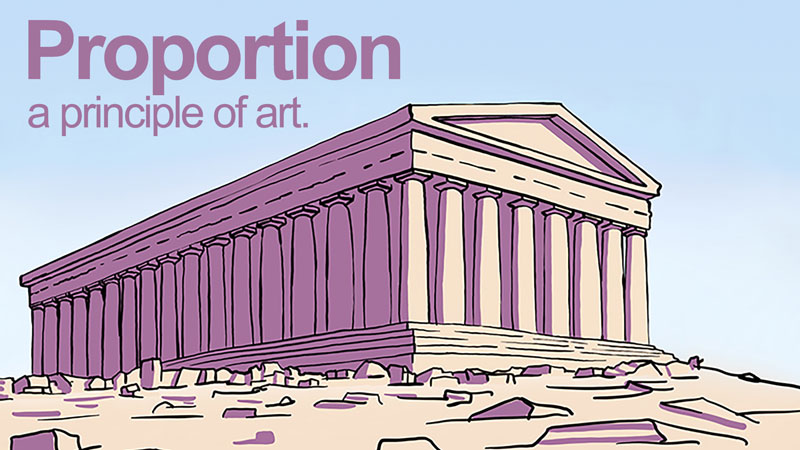
Proportion is a cornerstone of architectural design, shaping the visual harmony and spatial balance of built environments. From ancient temples to contemporary skyscrapers, architects have wielded the power of proportion to evoke a sense of beauty and order in their creations. Human scale is the relationship between the size of a space and the size of the people who will be using it. It is important in interior design because it can affect how comfortable and welcoming a space feels.

Balance in Website Layouts

The size of the head compared to the body resembles a true human figure. Relative to the size of the average person, it’s almost three times as large. Framing directs focus and emphasizes specific aspects of the design, acting like a visual spotlight that draws attention to key elements. When it comes to design, color is one of the first things that both users and designers notice. It can function as a standalone element or serve as a backdrop for others, such as lines, forms, textures, or typography.

Principles of Design: Pattern

By carefully crafting patterns, designers can evoke emotions, convey messages more powerfully, and create a sense of harmony and unity within their works. The principles of design are fundamental elements that help structure and organize visual material effectively. Balance, alignment, contrast, repetition, hierarchy, and unity are key to creating aesthetically pleasing and functional designs. These principles guide designers in arranging components in a way that is visually appealing and easy to understand. By applying these principles, designers ensure that every part of their work contributes to a cohesive whole. This not only enhances the beauty of a design but also boosts its functionality and effectiveness.

Principles of Design: Variety

Accentuating parts of the design using texture, form or color will provide interest and lead the eye through the design, however, too much emphasis will feel chaotic. This image uses a lot of proportion and scale to emphasize the different sizes of elements. It gives a sense of clarity to the size of Big Ben in the distance to the market stalls that are closer.

VARIETY

proportion in design principles

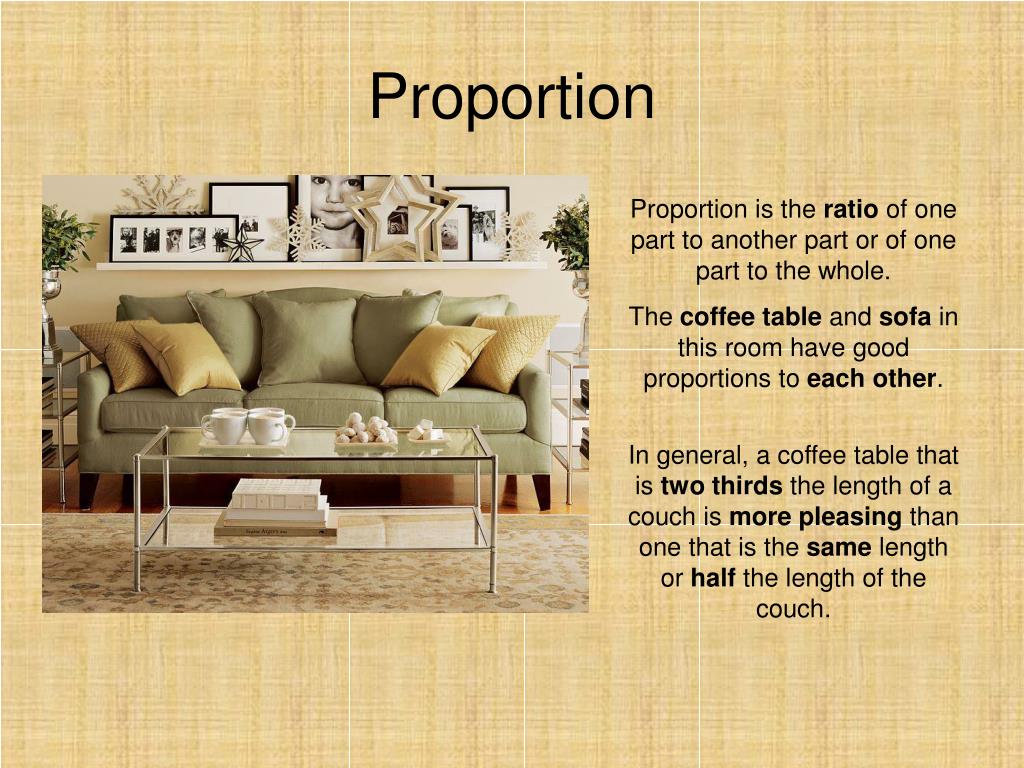
One example of using proportion in interior design is by creating a balanced composition of furniture and decor. For instance, a large sectional sofa in a small room can create a cramped and cluttered feel. Decor is the finishing touch in interior design, and proportion is essential for creating a cohesive look. When choosing decor pieces, it’s essential to consider the size of the space and the other elements in the room.

How to Use the Principles of Design

Trial Design Principles for Patients at High Bleeding Risk Undergoing PCI: JACC Scientific Expert Panel - ScienceDirect.com

Trial Design Principles for Patients at High Bleeding Risk Undergoing PCI: JACC Scientific Expert Panel.

Posted: Mon, 14 Sep 2020 19:27:51 GMT [source]

For example, if a room has high ceilings, it may be necessary to use taller furniture to fill the space. On the other hand, if a room has low ceilings, it may be necessary to use lower furniture to avoid making the space feel cramped. Sequence refers to how transitions in the elements of plant size, shape and texture are used.

proportion in design principles

It's commonly seen in nature—like the petals on a flower—and can create a strong focal point in your designs. A good example is the design of a dartboard, where all elements radiate out from the bullseye. Another way is by using symmetry, which involves placing identical or similar elements on either side of a central axis. Instead, a smaller sofa or a set of armchairs can create a more open and inviting space. Another example is by using art and accessories that complement the scale of the room. Large pieces of artwork in a small room can overwhelm the space, while smaller pieces can create a cohesive look.

Principles of Design: Contrast

Similarly, in architecture, if one element is too big or too small compared to the rest, it throws off the balance of the entire design. Think of a perfectly mirrored image, where the left and right side are identical. This type of balance is simple, clean, and can create a sense of calm and stability. Some of the world's most famous logos, like McDonald's and Apple, use symmetry to their advantage. The kitchen is a space where proportion is vital for both functionality and aesthetics.

Achieving balance creates a sense of harmony, stability, and equilibrium. You can apply contrast by using colors, textures, sizes, and shapes. Asymmetrical balance is achieved when the elements on either side of a central axis aren’t the same.

When you look at a design composition from now on, think of these principles and how they are being applied. You'll be able to decode the most intricate designs and understand what's working and what's not. In the example below, the pattern repeats itself from edge to edge without any disruptions.

Proportion is the harmonious relationship between two or more elements of scale. In order to take advantage of proportion in UI design, we must first understand the differences between size, scale, and proportion. All three of these terms are related, but there are some clear distinctions to consider. A king-size bed in a small bedroom can quickly overwhelm the space, while a twin bed in a large bedroom can look out of place.

Photos from 2024 White House Correspondents' Dinner: Star Sightings

white house photos

The private residence of the first family is located on the second floor. In addition to the Presidential Bedroom Suite, the second floor includes historic spaces, such as the Queens’ Bedroom, the Treaty Room, the Yellow Oval Room, the Center Hall, and the East and West Sitting Rooms. Jefferson announced the competition—which offered a prize of $500 (or a medal of equal value)—and even reportedly submitted a design himself under the initials “A.Z”. In July of 1792, Irish-born architect James Hoban’s submission was selected by Washington, and he was hired to build the White House. The guests’ dressiness made for a striking contrast with protesters who gathered outside to confront the mix of politicians, media types and A-list celebrities about the war in Gaza. Harris wasn’t the only White House attendee with a standout look.

The Best Red Carpet Looks at the White House Correspondents’ Association Dinner

The Blue Room is the center of the State Floor of the White House where the President formally receives guests. This photo shows the Blue Room during the William J. Clinton Administration. During the holidays, the Blue Room is the location of the official White House’s Christmas tree.

About the White House Historical Association

Use of public transportation is strongly encouraged, as there is no parking available on the White House complex and street parking is limited. The closest Metrorail stations to the White House are Federal Triangle (blue and orange lines), Metro Center (blue, orange, silver, and red lines), and McPherson Square (blue, orange, and silver lines). Simple illustration of the white in tones of blue and a flying American flag. The East Room is the largest room in the White House and is approximately 80 feet by 37 feet. It is traditionally used for large gatherings, such as banquets, receptions, concerts, award presentations, and press conferences. A full-length portrait of George Washington is one of several painted by Gilbert Stuart and has hung here since 1800.

Biden and Harris talk about the American Rescue Plan with governors and mayors.

Biden roasts Trump as Gaza protesters target White House Correspondents Dinner - Axios

Biden roasts Trump as Gaza protesters target White House Correspondents Dinner.

Posted: Sun, 28 Apr 2024 06:26:36 GMT [source]

This oil on canvas portrait of President Harry S. Truman was painted by artist Greta Kempton in 1947 from five sittings in the White House Cabinet Room. She also painted a portrait of First Lady Elizabeth “Bess” Truman. The portrait was the gift of anonymous donors and was added to the White House Collection in 1953. Beautiful landscaping has graced the White House grounds since the administration of Thomas Jefferson.

A Proclamation on Education and Sharing Day, USA, 2024

Instead, Washington and his secretary of state, Thomas Jefferson, decided that the design would be chosen through a national competition. Located at the country’s most well-known address, 1600 Pennsylvania Ave in Washington, DC, the White House is America’s most iconic home. The official residence and office of the president of the United States, the White House has been the home of every president since John Adams and the site of some of the most important events in American history. The White House is the official residence and principal workplace of the President of the United States, located at 1600 Pennsylvania Avenue. Beautifully landscaped lawn with flowers, fountain and blooming trees is in foreground. The White House is the oldest public building in Washington, D.C.

Statement from President Joe Biden on Clemency Actions

Hollywood Descends Upon DC As Scarlett Johansson, Da'Vine Joy Randolph, and Other Stars Attend the White House ... - Vanity Fair

Hollywood Descends Upon DC As Scarlett Johansson, Da'Vine Joy Randolph, and Other Stars Attend the White House ....

Posted: Sun, 28 Apr 2024 16:35:09 GMT [source]

This portrait of First Lady Barbara Bush was done by Charles Fagan in 2005. This was not the portrait presented at the ceremony unveiling the official portrait of President George H.W. Bush on July 17, 1995. Mrs. Bush did not like her first portrait by Herbert E. Abrams and had this second painting completed ten years after the original portrait was unveiled. Millie, the family’s English springer spaniel who lived with the Bushes and gave birth to a litter of puppies at the White House, can be seen at the bottom left. This painting was a gift of Britt and Kaye Rice and was added to the White House Collection in 2005. This oil on canvas portrait of First Lady Rosalynn Carter was painted by American artist George Augusta in 1984, a few years after the end of Jimmy Carter's presidency.

Colin Jost touches on President Biden's biggest controversies, 2024 campaign

white house photos

Works great for political advertising during a presidential election season. This oil on canvas portrait of First Lady Lady Bird Johnson was painted by Elizabeth Shoumatoff in 1968. According to historian William Seale, her portrait “is one of the best likenesses of any in the White House” because it captures Lady Bird well even though she was not always photogenic.

The Entrance Hall is used for ceremonial occasions when the President welcome's visitors. Lafayette Park, the seven-acre park in front of the White House was named to honor the Marquis de Lafayette, the French hero of the American Revolution. The park is used for public events and is often a gathering place for protesters.

Newsletter Sign Up

This portrait of President Ronald Reagan was painted in 1989 by Aaron Shikler, a portraitist known for his paintings of prominent American politicians and celebrities. In addition to Reagan, who posed for this portrait at the end of his presidency, Shikler painted portraits of President John F. Kennedy and first ladies Jacqueline Kennedy and Nancy Reagan. Despite the success of Shikler’s earlier Kennedy portrait, this portrait was widely panned. Reagan sat for this portrait several times and Shikler took photographs during the sittings.

Set on 18 acres of land, the White House is made up of the Executive Residence, the East Wing, and the West Wing, with its famous Oval Office. Today, the residence includes six levels with 132 rooms, including 16 family and guest rooms and 35 bathrooms, and is spread over 55,000 square feet. The White House has been home to every president from John Adams to Joe Biden, and it is an enduring symbol of democracy and one of the most recognizable buildings in the world, attracting 500,000 visitors annually. The White House is the official residence and principal workplace of the President of the United States.

Naomi Biden wore a blue column dress with a rounded collar that recalled the 1960s styles of Jackie Kennedy. And White House press secretary Karine Jean-Pierre wore a plunging black gown shot through with wiggles of silver glitter, sheer sleeves fluttering over her shoulders. Although the event is lovingly referred to as the “Nerd Prom,” classic prom dresses and ruffle-collared frocks had no place on this red carpet, or on the sidewalks outside, as a flurry of attendees made their way into the event.

Rosalynn Carter returned to Washington to sit for this portrait at Blair House. At President Carter’s request, there was no portrait unveiling ceremony. Shoumatoff began work on the president’s second portrait in April 1968 and completed it in late July. This time around, President Johnson participated in more sittings than he had done for Peter Hurd, posing seven times in the Lincoln Sitting Room. The result was an oil portrait with Johnson in the foreground and the Capitol dome in the background to represent his time in the House of Representatives and the Senate. This is the official portrait of President Johnson in the White House Collection.

This portrait of President Franklin Delano Roosevelt was painted by artist Frank O. Salisbury. Although the artist had difficulty finding time for the president to sit, Roosevelt eventually sat for this portrait in the Oval Office in 1934. This painting was originally for the Genealogical Society of New York, but Salisbury painted this copy which was added to the White House Collection in 1947 as a gift of Myron C. Taylor. White House icons set up to print one color for inexpensive print projects. Black and grayscale, red tints of the same red, blue and tints of the same blue.

Whats On Cooper Hewitt, Smithsonian Design Museum

cooper hewitt national design museum

She was also founder and executive creative director of Studio Partners, where she collaborated with clients to create bold brand experiences, and she was executive creative director at SYPartners, where she led award-winning design for clients including IBM, Apple, Under Armour, and Starbucks. Cheryl Barton, PLA, FASLA, FAAR, LEED AP, is a landscape architect, design science educator, and founder of San Francisco based O|CB Studio. She has established a national reputation for the seamless integration of design excellence and environmental intelligence in her work. Cheryl received a master’s degree in Landscape Architecture from the Harvard Graduate School of Design and holds a BA in Fine Arts and Geology. She is a fellow and past president of the American Society of Landscape Architecture and a recipient of the prestigious Rome Prize.

Inside the Artist's Studio - 'An Atlas of Es Devlin' at the Cooper Hewitt - World-Architects

Inside the Artist's Studio - 'An Atlas of Es Devlin' at the Cooper Hewitt.

Posted: Mon, 27 Nov 2023 08:00:00 GMT [source]

Contemporary Muslim Fashions

A Dark, A Light, A Bright: The... Exhibitions - MutualArt.com

A Dark, A Light, A Bright: The... Exhibitions.

Posted: Wed, 18 Oct 2023 02:25:54 GMT [source]

Located in the landmark Andrew Carnegie mansion and boasting a beautiful public garden, Cooper Hewitt makes design come alive with unique temporary exhibitions and installations of the permanent collection. Cooper Hewitt aims to create provocative dialogues around design and amplify its historical continuum. A year-round program of lectures, conversations, and hands-on workshops provide access to the world’s leading design minds and engages design lovers of all ages in the design process. The museum’s annual National Design Awards is its largest and most visible education initiative. Honoring excellence, innovation, and lasting achievements in American design, the Awards are bestowed every fall at a gala dinner and ceremony in the museum’s Arthur Ross Terrace and Garden during National Design Week.

National Design Awards Cities

Held in conjunction with the Awards, National Design Week celebrates design’s impact on all aspects of daily life. Free public programs for all ages are offered at the museum based on the vision and work of National Design Award winners, and organizations and institutions across the country host events in recognition of the importance of design. Cooper Hewitt is the only museum in the United States devoted exclusively to historical and contemporary design, and is the steward of one of the most diverse and comprehensive design collections in existence—more than 215,000 design objects spanning 30 centuries. From ancient textiles and works on paper to icons of modern design and cutting-edge technologies, Cooper Hewitt’s collection serves as inspiration for creative work of all kinds and tells the story of design’s paramount importance in improving our world.

Building

Explore Cooper Hewitt using our virtual visitor guide complete with information on current exhibitions and suggested routes through the galleries. Shaping the National Design Collection, before the museum closes to the public at 6 p.m. Zuzek was a staff designer for Key West Hand Print Fabrics, where Lilly Pulitzer sourced most of her fabrics between 1962 and 1985.

cooper hewitt national design museum

Visual art collection

In 2021, Chavarria was a winner of the Vogue Fashion Fund, and in 2022, he was honored by El Museo del Barrio in excellence of fashion. Chavarria has worked for YEEZY as the executive lead of concept and design, and Calvin Klein, where he is now senior vice president of design. Shaping the National Design Collection, we invite Cooper Hewitt members to join us for an evening with award-winning designers and weavers Helena Hernmarck and Elizabeth Whelan. In conversation with Acting Director of Curatorial, Matilda McQuaid, Hernmarck and Whelan will discuss the innovations and inspirations which define their practices. Until the death of Sarah Cooper Hewitt, the management of the museum was handled by the Hewitt sisters as directors. Following Sarah's death in 1930, the trustees of the Cooper Union appointed a board of four directors, with Constance P. Hare as chair, to administer the Museum.

Textile Design

cooper hewitt national design museum

Eligible nominees are invited to submit materials for the jury’s review, which ultimately result in the creation of a shortlist and final roster of winners. Given in recognition of a design project for its significant contributions to addressing the urgency of the global climate crisis. Climate Action Award nominees do not require a minimum number of years of professional experience, however, the project must be in progress or realized. Given in recognition of an individual, company, or organization who has made a profound contribution to advancing the field.

Cooper Hewitt knits digital into experiences to enhance ideas, extend reach beyond museum walls and enable greater access, personalization, experimentation and connection. Working in disciplines as varied as graphic design, product design, and textile design, women designers have greatly enriched their respective fields. However, from the anonymity of domestic craft to traditionally male-dominated fields, such as industrial design and architecture, women have routinely been excluded from the story of design. Equal access to art and design education was a cause championed by Sarah and Eleanor Hewitt, who established the museum of decorative arts that became the Cooper Hewitt, Smithsonian Design Museum. Carrying on that legacy, this Design Topic features a selection of remarkable women in design from the museum’s collection.

Establishing a studio in Los Angeles, California, in 1976, she became the leading figure of the emergent “NEW WAVE” design movement. Greiman’s transmedia approach to design juxtaposes typography, photography, and other elements. Born in Trinidad and Tobago, Althea McNish (British, 1924–2020) moved to London and studied textile design at the Royal College of Arts. Known for her unprecedented combinations of patterns and colors, McNish helped introduce the Caribbean aesthetic to an international audience.

Cooper Hewitt, Smithsonian Design MuseumNew York, United States

Offering creative approaches to textile waste, this exhibition presents the work of three designers thinking through sustainability. An Atlas of Es Devlin is the first monographic museum exhibition dedicated to British artist and stage designer Es Devlin (born 1971), who is renowned for work that transforms audiences. After the death of her husband Alvin Lustig, Elaine Lustig Cohen (American, 1927–2016) took the reins of his graphic design business. Retaining his clients, she quickly learned how to run the business and became a successful graphic designer herself.

The mansion was designed by the architectural firm of Babb, Cook & Willard in the style of a Georgian country house. Another innovation was the inclusion of both central heating and a precursor to air-conditioning. In the cellar, enormous twin boilers were run by coal transferred from storage bin to furnace by a coal car that traveled over a miniature railroad track. In 1996, Rebeca Méndez (Mexican-American, born 1962) opened her eponymous studio, specializing in film and video installations for cultural programs and institutions, collaborations with architects on interior commissions, photography, book design, and public art. Given in recognition of a designer or practice who has demonstrated profound talent in the early stages of their career to contribute to the future of design.

Cooper Hewitt, Smithsonian Design Museum is the nation’s only museum dedicated exclusively to historic and contemporary design, with a collection of more than 215,000 design objects spanning 30 centuries. Susana Rodríguez de Tembleque is an award-winning designer, innovator, and storyteller. She is the VP of design of IBM Research, the collective of laboratories in charge of inventing what’s next in computing. Susana’s mission is to create an excellent, differentiated, end-to-end experience for IBM Research.

The Museum presents compelling perspectives on the impact of design on daily life through active educational programs, exhibitions, and publications. Recently renovated, Cooper Hewitt offers an entirely new and invigorated experience, with interactive, immersive creative technologies at the heart of every visit and 60% more gallery space to explore. Programs included a special reception and panel discussion, a professional development for K–12 educators, and design-based, hands-on learning experiences for local K–12 schools, including Madison Park Technical Vocational High School, Orchard Gardens K-8 Pilot School, and TechBoston Academy.

Given to an individual or firm for the impactful use of design in the service of information sharing, messaging, and overall communication. Given to an individual or firm for their meaningful contributions to the built environment that advance the understanding of our spatial experiences. Cooper Hewitt offers a variety of access services so that everyone may enjoy the museum to the fullest extent possible.

Emerging Designer nominees must be in the early stages of their career with up to 7 years of professional experience if an individual or established for a maximum of 7 years if a firm, corporation, or organization. Founders and/or leadership of the firm, corporation, or organization must also be in the early stages of their career with up to 7 years of professional experience in the work of the firm, corporation, or organization. Winners of the Emerging Designer Award are ineligible to win in any other award category until 10 years after receiving the Emerging Designer Award. Willy Chavarria launched his eponymous label in 2015 with a sensitive and cinematic approach. Chavarria takes content from his own upbringing in both agricultural fields and housing projects of the San Joaquin Valley in California and combines it with a high fashion sensibility and love for luxury that he developed during his years designing for Ralph Lauren.

American textile designer, weaver, and color authority Dorothy Liebes (1897–1972) had a profound influence across design fields, helping to shape American tastes in areas from interiors and transportation to industrial design, fashion, and film. 2023 National Design Award winners—Seymour Chwast, Design Visionary; Arem Duplessis, Communication Design; and Beatriz Lozano, Emerging Designer—in a conversation about how changes in communication design have shaped their work, as well as where they see the future of the field. Conversation moderated by Ellen Lupton, Curator Emerita, Cooper Hewitt, Smithsonian Design Museum. In October 2023, Cooper Hewitt celebrated National Design Week with free admission and special programming. Given to an individual or firm for their meaningful contributions to the integration between the built, urban, and natural environments and for advancing the understanding of our spatial experiences. Given to an individual or firm for their innovative contributions to interior environments that advance the understanding of our spatial experiences.

Colin Jost hosts White House Correspondents Dinner

white house photos

This oil on canvas painting was completed by renowned American portraitist Herbert Abrams in 1982 after Jimmy Carter's presidency. This portrait was hung on a wall in the State Floor of the White House on March 17, 1983. Despite Carter’s lack of an unveiling ceremony, the tradition picked up again with President Ronald Reagan’s portrait ceremony. This oil on canvas portrait was painted by James Anthony Wills in 1984, ten years after Nixon resigned from office. The former president donated it to the White House Collection in 1984, replacing the Alexander Clayton portrait as Nixon’s official presidential portrait. This oil on canvas portrait of President John F. Kennedy was completed by artist Aaron Shikler in 1970, seven years after his assassination.

Rhode Island News

This oil on canvas portrait of President Lyndon Johnson was painted by Elizabeth Shoumatoff in 1968. While President Johnson admired this work, he was less enthusiastic about his first artistic rendering. President Johnson’s first presidential portrait was completed in 1967 by Peter Hurd, an artist best known for his western landscapes and portraits. When the portrait was presented, President Johnson was very unhappy with its appearance calling it “the ugliest thing I ever saw.” Johnson refused to have the painting represent him in the White House. He received twenty minutes of the president’s time at Johnson’s Texas ranch and thirty minutes at Camp David before finishing the portrait.

About the White House Historical Association

Lady Bird began sitting for this portrait on November 1, 1967, in the Lincoln sitting room. At one of her later sittings, President Johnson was so impressed by the portrait that he agreed to have Shoumatoff complete his portrait as well. This oil on panel portrait of President Dwight D. Eisenhower was completed in 1967 by artist James Anthony Wills. Wills painted several portraits of Eisenhower, later becoming his preferred portraitist after his presidency. This portrait was donated to the White House Collection by Harry Darby in 1967. The White House has been the residence of every U.S. president since John Adams in 1800.

Chants of 'shame on you' greet guests at White House correspondents' dinner shadowed by war in Gaza - The Associated Press

Chants of 'shame on you' greet guests at White House correspondents' dinner shadowed by war in Gaza.

Posted: Sun, 28 Apr 2024 08:37:00 GMT [source]

Red carpet looks from the White House correspondents’ dinner

Approximately 140 guests can dine in the room for formal events. Today, we answered history’s call at this critical inflection point.With the signing of our national security package, we tell the world that America stands resolutely for democracy and freedom, and against tyranny and oppression. Gershkovich’s parents and Tice’s mother were among the approximately 2,600 guests at the dinner, an estimate provided by NBC News political correspondent Steve Kornacki in a video that played at the event. The 2024 White House Correspondents’ Dinner, held on April 27 at the Washington Hilton Hotel in Washington, D.C., welcomed journalists and many celebrities on its red carpet. The event, hosted annually as the main source of revenue for the White House Correspondents’ Association (WHCA) to finance their work, will feature “Saturday Night Live” Colin Jost as a host and President Joe Biden is expected to deliver remarks. Contrary to a popular myth that the building was painted white to hide scorch marks after the fire in 1814, the residence was first painted white in 1798 to protect the exterior from weather damage.

Colin Jost Roasts Donald Trump On Trial And Riffs On Joe Biden’s Age During WHCA Dinner Gig

The South Lawn features over three dozen commemorative trees that date back to the 1870s. During the Kennedy administration, Rachel Lambert “Bunny” Mellon redesigned the White House gardens, including the famed Rose Garden outside the West Wing. The East Garden, also redesigned by Mellon, was later named in honor of Jacqueline Kennedy. First lady Michelle Obama added a 1,100-square-foot vegetable garden on the south grounds in 2009. The West Wing also houses the Situation Room, the Cabinet Room, the Press Room, and offices for advisors and the chief of staff. Additional offices for the president’s staff are located in the Eisenhower Executive Office Building.

The president said later that age was the only thing he and Trump had in common, adding, “My vice president actually endorses me,” a reference to former Vice President Mike Pence's refusal to say he'll back his former running mate in 2024. See photos of attendees at the annual White House correspondents’ dinner, as well as from the protests outside. The White House Historical Association has had an active role in acquiring and donating portraits of recent presidents and first ladies since 1965. The portraits are formally presented to the public and inducted into the White House Collection. While Mr. Fetterman may have been in the minority among his political peers, with most of whom following the president’s example and opting for a traditional tux, creative black tie proved a talking point.

Young Americans know that the climate crisis is the existential threat of our time.

white house photos

He was quite impressed with the portrait and called back over his shoulder as he exited the room, “tell her she can sign up to start painting me right away." This oil on canvas portrait of First Lady Elizabeth “Bess” Wallace Truman was painted by Greta Kempton in 1967. Sittings for that portrait were probably done at Blair House, as the White House was undergoing a major renovation between 1948 and 1952. In 1967, the White House Historical Association gifted a copy of the painting to the White House Collection.

Photos: 2024 White House Correspondents' Dinner – 95.5 WSB - WSB Radio

Photos: 2024 White House Correspondents' Dinner – 95.5 WSB.

Posted: Sun, 28 Apr 2024 11:32:16 GMT [source]

John Adams was the first president to live in the White House, moving in on November 1st, 1800. The executive mansion has been the official residence of every subsequent president. L’Enfant initially proposed an opulent design for the residence, which would have resulted in a building four times the size of what stands today. He was ultimately dismissed by the three-person committee overseeing the development of the District of Columbia, and his palatial design was abandoned.

In support of the Association’s educational mission, each image is accompanied by carefully documented historical information provided free to the public in an easy to use format. As a registered user, you can create and save albums, share images on social media, and access small images for download. This portrait by Alexander Clayton was completed in 1981 following sittings with former President Richard Nixon at his New York residence.

This portrait of First Lady Hillary Clinton was painted by renowned artist Simmie Knox in 2002 after Bill Clinton left office. Knox, who also painted a portrait of President Clinton, became the first African American selected to complete an official White House portrait. Both portraits of the Clintons by Knox debuted in the East Room of the White House on June 14, 2004.

The first major renovation of the White House took place during the War of 1812. On August 24, 1814, British troops marched on Washington, DC, and burned the White House, the Capitol, and several other public buildings. Hoban returned to rebuild the residence, and while work was completed in 1817, he continued to work on additions for several more years. In 1824, he added the South Portico for James Monroe, and he constructed the North Portico for Andrew Jackson from 1829 to 1830. Even those who did not have a high-end designer behind their looks used the red carpet as a platform for statement-making. Sen. John Fetterman (D-Pa.), known for eschewing the suits and lace-up shoes typical of members of Congress, wore a hoodie printed with a bow tie and pleated bib, plus a carnation on the would-be buttonhole.

The vice president has an office in the West Wing, as well as the ceremonial office in the Eisenhower Executive Office Building. The central Executive Residence is home to the president’s living spaces and the State Rooms. The ground floor originally housed service areas, but now includes the Diplomatic Reception Room, the White House Library, the Map Room, the Vermeil Room, and the China Room.

Nancy Reagan only sat for Shikler in New York, although he did take photos of her at the White House in 1985. This portrait was officially unveiled at the White House on November 15, 1989, alongside a portrait, also by Shikler, of President Ronald Reagan. During the ceremony President Bush said of Mrs. Reagan’s portrait, “It will hang in the Ground Floor Corridor with those of the most recent former First Ladies.

L-Shaped House Plans: A Perfect Solution for Building Sites

Table Of Content Plan: #206-1020 Should You Consider an L Shaped House? Experiment with Diverse Designs Plan: #142-1266 Plan: #206-1049 Idea...